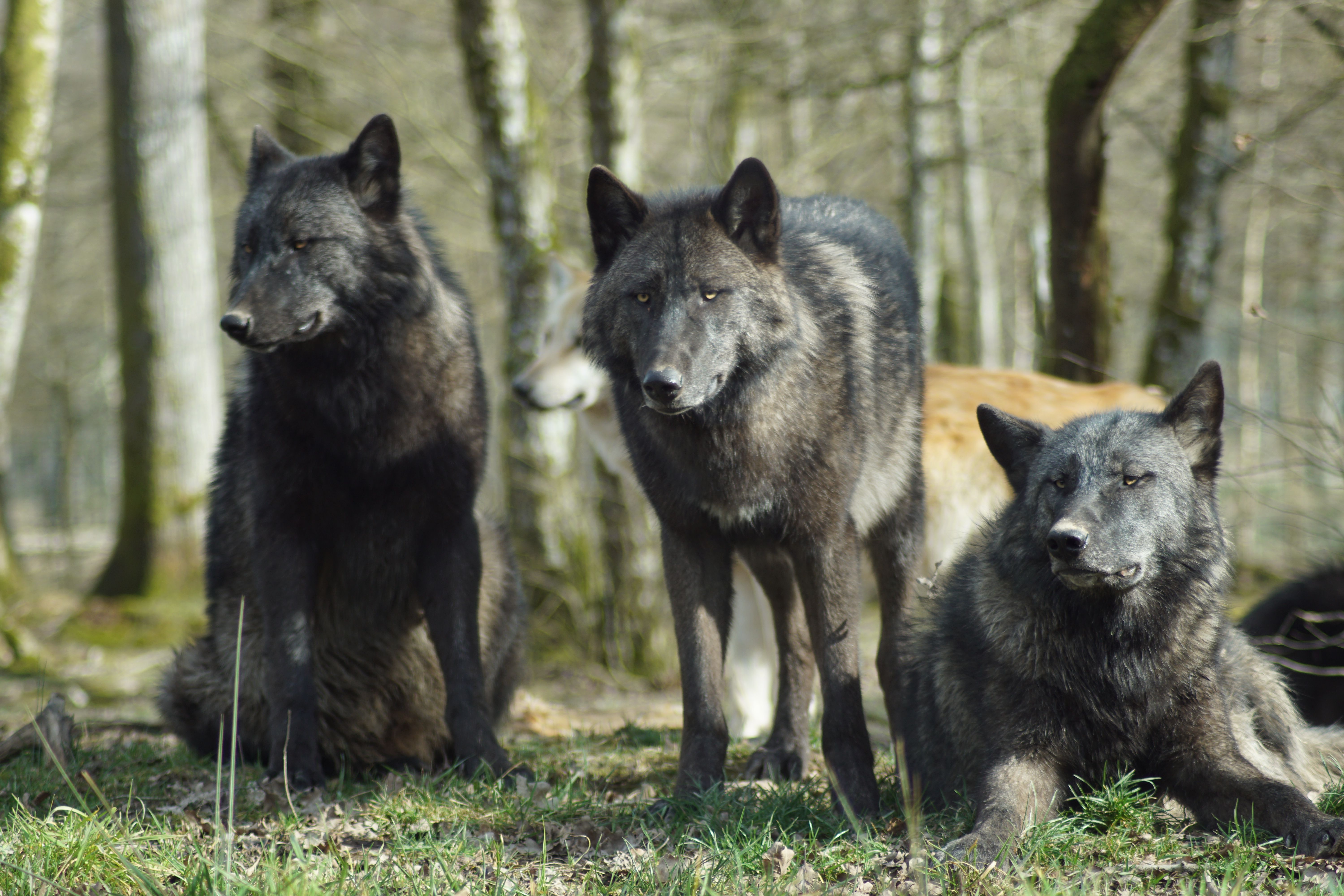
Where dogs come from
Before dogs, there were wolves.
And they were magnificent.
Everything you love about your dog — the loyalty, the intelligence, the eyes that seem to understand everything — came from one of the most sophisticated social predators to ever walk the earth. This page is for them.
Why it exists
What this actually is.
Eliminating decision fatigue
Stop spending hours scrolling tutorials or buying random puzzle toys your dog memorizes in five minutes. The internet is too noisy, and looking things up shouldn't feel like a chore. We take over the thinking and the daily planning — so you don't have to.
Enjoy your dog more
By taking the mental strain off your plate, enrichment transforms from a stressful item on your to-do list into a seamless, therapeutic routine you both look forward to sharing. Less guilt. More actual moments together.
The ultimate bonding agent
The single biggest factor in a well-behaved, deeply connected dog is learning and cooperating together. This curriculum builds an unbreakable bridge of shared focus, trust, and connection. It's ultimately about the dogs.
The ancestral blueprint
Modern dog. Ancient operating system.
While our dogs live in apartments and lie on sofas, they still carry the hardwired biological software of their ancestors. In the wild, canids spend up to 80% of their waking hours scanning, tracking, foraging, and problem-solving — not for entertainment, but to survive.
When we remove those challenges, that genetic energy turns inward — manifesting as frustration, barking, destruction, and anxiety. Calmmdog honors the evolutionary blueprint by providing safe, low-liability outlets (shredding, chewing, scent work) to satisfy those primitive drives inside a modern home.
The animal itself
Six things worth knowing about wolves.
Not wolf mythology. Not pop-science dominance theory. The actual animal — as understood by behavioral ecologists and wildlife biologists today.
300M
olfactory receptors
Humans have 6 million. A wolf has 300 million. Their entire experience of the world is built on smell — a vast, layered landscape of information that is completely invisible to us. Every footprint tells a story. Every breeze carries news.
25–35
miles traveled per day
A wild wolf covers this daily — not as structured exercise, but simply as life. Hunting, patrolling territory, checking on pack members separated across vast ranges. Not restless. Not anxious. Just alive in the way wolves are meant to be alive.
40,000
years beside humans
The oldest confirmed dog remains date to around 14,000 years ago. Genetic evidence points closer to 40,000. No other animal has lived alongside humans for so long, so closely, at such cost to its original wildness. That partnership deserves reverence.
7
core drive types
Prey drive, pack drive, defence drive, hunt drive, retrieve drive, scent drive, herding drive. Wolves use all of them in balance. Dogs have had one or two amplified to extremes by centuries of selective breeding — and live with the rest suppressed, often without an outlet.
20+
distinct vocalizations
Wolves howl to locate the pack, bark as an alarm, whine in submission, growl as warning, whimper to greet, yip in play. Dogs inherited every one of these — and refined a few specifically for communicating with us, their long-time collaborators.
∞
social intelligence
Wolf packs are not the rigid dominance hierarchies popularized in the 1970s — that research was conducted on captive, unrelated wolves. Wild packs are cooperative family units: parents, siblings, pups. They share food, babysit, mourn, play. That same social brain lives inside your dog.
"A wolf is not a broken dog.
A dog is not a tamed wolf.
They are something entirely new."
A point behavioral ecologists have been making since the 1990s — and popular culture is still catching up with.
40,000 years in four chapters
How wolves became your dog.
It is one of the most remarkable stories in the history of life on earth. And it begins with the wolves, not with us.
~40,000 years ago
The bold ones moved closer
Wolves that tolerated human proximity had an advantage: access to food scraps around campsites. The bolder, calmer wolves ate. The fearful ones didn't. Over hundreds of generations, that small difference compounded into something new. Nobody chose it. No one planned it. Wolves self-domesticated — they chose us first. Every dog on earth exists because of that ancient act of bravery by a few wolves willing to get close.
~15,000 years ago
A mutual deal was struck
Dogs warned of danger. Humans fed dogs. The relationship became genuinely symbiotic — one of the only true interspecies partnerships in the history of life on earth. Dogs didn't just live near humans. They integrated into human social groups so deeply that they learned to read human gestures and eye contact in ways that even wolves raised by humans never do. The bond was, and still is, extraordinary.
~5,000 years ago
We started writing job descriptions in DNA
Herding dogs. Sled dogs. Hunting dogs. Guard dogs. Lap dogs. We took the wolf's natural drives — prey drive, scent drive, pack drive — and amplified one or two in each breed to extremes we needed. The border collie's herding stalk is a truncated wolf prey sequence. The pointer's freeze is the same. The bloodhound's nose is the scent drive dialled to eleven. We didn't invent these drives. We borrowed them from wolves and turned up the volume.
Today
The wolf is still in there
Most dogs will never herd a flock, pull a sled, or flush a bird. But the neural wiring is still there, running in the background — waiting for a job that isn't coming. A bored Border Collie isn't badly behaved. A reactive Malinois isn't broken. They are animals carrying ancient software in a world that no longer has the hardware to run it. When we understand this, 'problems' become needs. And needs, at least, can be met.
Setting the record straight
What we got wrong about wolves.
Decades of bad science — later corrected, but rarely retracted from the public conversation — did real damage to how we see wolves and how we treat dogs.
Myth
Wolves live by dominance hierarchies
What the science says
The 'alpha wolf' concept came from a 1970 study of captive, unrelated wolves forced together — not wild packs. Wild wolf packs are families: a breeding pair and their offspring. The researcher who wrote the original study, L. David Mech, spent decades trying to correct the record. 'Pack leader' dog training is built on a premise that doesn't exist in nature.
Myth
Wolves are lone predators
What the science says
Wolves are among the most cooperative hunters on earth. A single wolf cannot consistently take large prey alone. The pack functions as a coordinated unit — flanking, rotating, communicating through body language mid-chase. Their success rate as a team dwarfs what any individual could achieve.
Myth
Wolves are dangerous to humans by nature
What the science says
Healthy, wild wolves are extraordinarily shy of humans. In North America, documented unprovoked wolf attacks on humans are vanishingly rare — fewer than two dozen verified cases in recorded history. The wolf as indiscriminate predator is a cultural story, not a biological one.
Myth
Dogs are just domesticated wolves
What the science says
Dogs and modern wolves share a common ancestor but are not the same animal. Dogs have been evolving as a distinct lineage for tens of thousands of years. They read human social cues instinctively in ways wolves raised from birth by humans never do. They are not tamed wolves — they are a genuinely new kind of animal.
A debt we carry
We shaped them. We owe them.
Wolves didn't choose to become dogs. Over forty millennia we shaped them — their brains, their bodies, their drives, their very capacity to exist without us. We amplified instincts they cannot turn off, optimized them for human convenience, and called the result a companion animal.
That transformation produced something wonderful. It also created a responsibility. The breeds we most love — the working dogs, the herders, the high-drive scent hounds — carry the heaviest inherited load. They were built for a world that no longer exists. They deserve our understanding, not our frustration.
A dog that destroys furniture, barks for hours, or can't settle is not malfunctioning. They are a wolf-brain in an apartment, doing exactly what forty thousand years of partnership prepared them to do — just with nowhere to put it.
"The wolf gave us everything. The least we can do is understand what that cost them — and take it seriously."
— The premise behind Calmmdog
Where this started
The dogs that showed us.
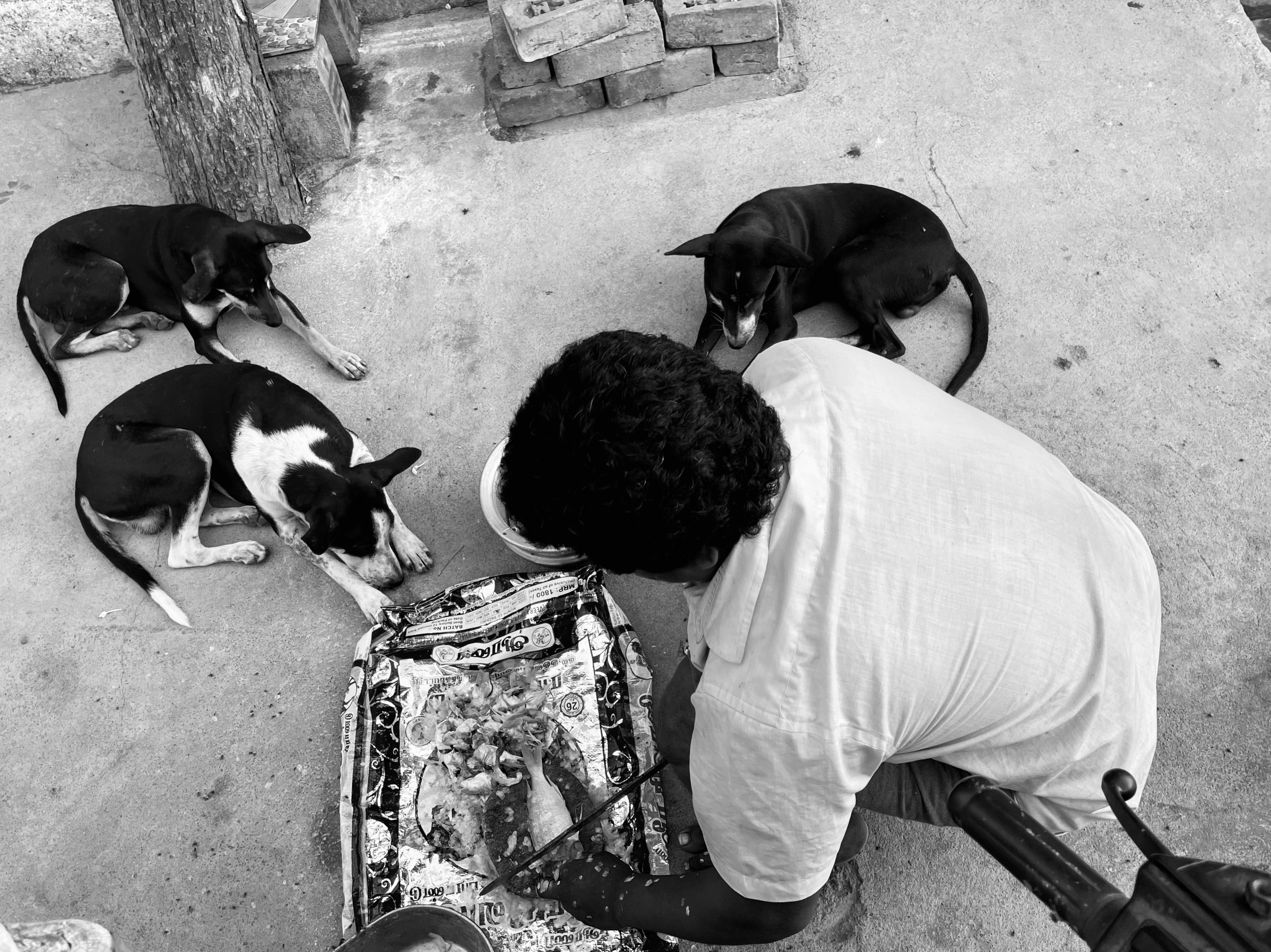
The idea for Calmmdog came from watching free-roaming dogs in Mexico, Greece, Thailand, and Romania — dogs with no trainer, no enrichment toys, no fancy gear. And yet they often look more settled, more purposeful, more themselves than many dogs in our living rooms.
They move on their own schedule. They choose what to sniff. They have real social bonds, real decisions, real consequences. They are, in some small way, closer to what dogs were always meant to be. Watching them is the closest most of us will ever get to watching wolves.
Calmmdog is our attempt to bring a sliver of that autonomy — that daily rhythm, that sense of purpose — back into the apartment. Not for us. For them.
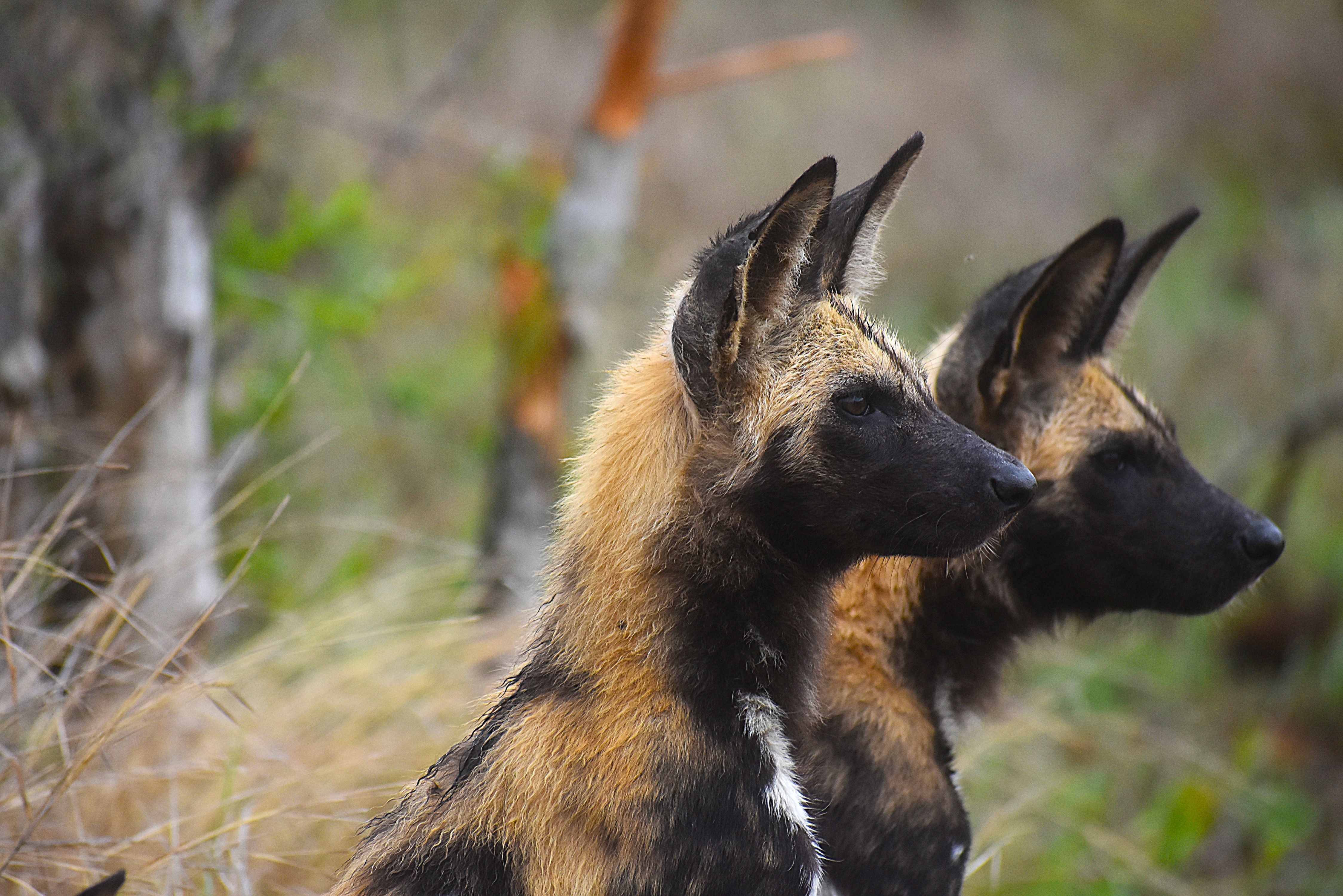
"Your dog is not the problem. The gap is the problem.
The gap between the animal they are and the life they're living."
Close the gap a little. Every day.
Get your dog's daily plan