One drill a day.
Calmer dog.
Anxious dog. Reactive dog. Bored dog. The fix is the same: structure. We build a routine around your dog's actual drives and deliver one breed-matched drill to your inbox every morning at 5am.
A dog who knows what's coming next doesn't need to be anxious about it. Predictable routine is the foundation — everything else follows.
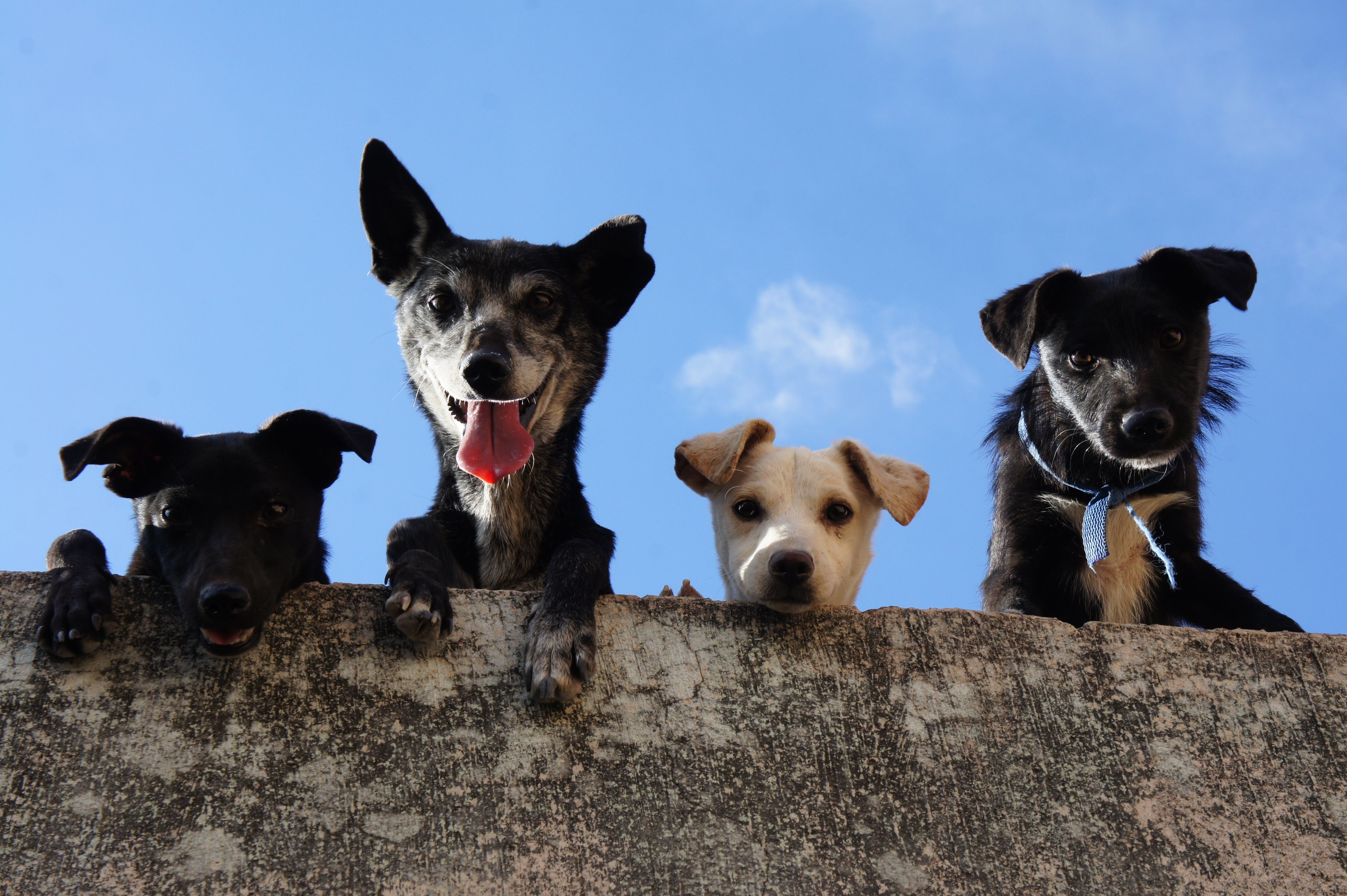
Routine isn't
a chore.
It's the whole answer.
Every behavior problem we see in dogs — anxiety, reactivity, destructive habits, restless nights — shares a common root: unpredictability. When a dog can't forecast what their day holds, their nervous system stays braced for whatever comes next.
Routine changes that. A consistent daily framework tells your dog's brain: you're safe, you're exercised, you're mentally spent in the right way. That's not a training trick. That's a nervous system reset — one morning at a time.
Predictability reduces stress
When the same things happen at the same time each day, the chronic stress response dampens. Your dog stops scanning for threats because they already know what's next.
Structure creates silence
A dog with a reliable routine doesn't need to fill the gaps with barking, chewing, or anxiety. The schedule does the heavy lifting so they can finally rest.
Calm is built, not waited for
It doesn't arrive on its own. It's the result of consistent small actions, repeated every morning. Daily consistency is the point — not a shortcut around it.
Built around their drives
Heelers need to problem-solve. Retrievers need to carry. Chihuahuas need nose work. Your plan targets the hardwired patterns that make your dog your dog.
Before the day starts
No app. No login. One email at 5am with exactly what to do — so the routine starts before the chaos does. Open it, do it, done.
Routine builds the bond
A nervous dog doing a quiet drill with you every morning is building two things: confidence in the world, and trust in you. Walks don't do that the same way.
How it works
Simple by design.
Tell us about your dog
Breed, age, personality, what they do when they're bored. The more honest you are, the better it gets.
We build the plan
Custom enrichment matched to your dog's actual hardwired drives, living situation, and your goal.
One drill every morning
Arrives at 5 am. Open it, do it, log how it went. We adapt the next one around what you tell us.
One decision
eliminated.
You already make 200 decisions before noon. "What should I do with the dog today?" doesn't need to be one of them. We send you exactly what to do. You just do it.
New baby
You have 4 minutes.
We know. The dog still needs something today. Open the email. The drill is already picked — read it, grab what's listed, and you're done in 15 minutes.
Exam season
Study first.
When your brain is full, the last thing you need is to research enrichment ideas. Open your inbox. Do the one thing. Close it.
New job
Adjust period is real.
New commute, new hours, new everything — your dog feels the shift. A tiny routine holds the bond while everything else is changing.
Hard season
Grief. Burnout. Chaos.
Sometimes existing is the achievement. We'll keep the bar low and the activities calm. You and the dog, five minutes, that's it.
You pick your intensity level in the quiz — from one tiny thing to a full enrichment session.
Bestselling books · peer-reviewed studies · certified enrichment expertise
"Play triggers calming alpha waves. Grooming triggers focused beta waves. Your dog needs both — just not at the same time."
Calmmdog matches each day's activity type to your dog's current arousal state, not a one-size schedule.
"A Kong keeps a dog calm while they work it. Novel exploration keeps them calm for hours afterward."
We rotate both types across the week — task-calm for busy days, deep-decompression for the ones that need it.
"The moment a dog solves a puzzle, dopamine spikes. But only if it was just hard enough — mastered toys go flat."
Every drill rotates difficulty and variation so the challenge never goes stale.
"Barkers and pacers need completely different tools. The wrong one makes it worse."
Vocal reactors get tactile redirection (ball, tug). Somatic reactors get scent barriers. Your intake tells us which.
"Your husky isn't broken. Your hound isn't stubborn. They're running ancient software — working exactly as designed."
High wolf-ancestry breeds are built for independence. We build with that wiring, not against it.
Be honest
You already know
something's off.
Your dog has destroyed exactly one thing of sentimental value.
You said it was fine. It was not fine.
You've googled "why is my dog staring at me" at 11pm.
The answer did not satisfy you.
You bought three puzzle toys.
Solved. Solved. Solved. Under a minute each. You were proud and then devastated.
Your vet asked if your dog gets mental stimulation.
You said "walks." They wrote something down. You didn't ask what.
Your dog shuts down at the dog park.
Not bad. Overwhelmed. There is a difference, and it changes everything about how to help them.
You've been told your dog is "just anxious."
Like it's a personality trait. It's not. It's a nervous system that hasn't been given the right outlet yet.
None of this makes you a bad owner. It makes you a normal one.
The plan fixes the boring parts.
Calm is a skill.
Your dog can learn it.
Anxious dogs aren't broken. They're under-stimulated in very specific ways. When a nervous dog succeeds at something — even something tiny — their nervous system registers it. Do that enough times, in the right sequence, and the dog who used to pace the hallway starts choosing to lie down instead.
That's not a miracle. That's just what happens when a dog's actual needs get met, consistently, every day.
Reactive on leash
Drive gets a legal outlet — the reactivity loses its charge
Won't settle at home
The right mental load creates the right kind of tired
Shuts down around strangers
Confidence built in private transfers to public over time
Paces, whines, digs
Frustration from unmet drives — not disobedience
They're watching you
every morning anyway.
Your dog already tracks your every move at 5am. They know your alarm, your coffee ritual, your shoes. What they're waiting for is a signal that says you see me too.
Fifteen minutes of a breed-matched drill — done quietly, together — does something that an hour of walking doesn't. It creates a shared language. A rhythm. The kind of trust that makes a nervous dog start to believe the world is manageable, because you're in it with them.
"The dog doesn't need a better owner.
They need a daily reason to trust one."
— the calmmdog premise
Build the planCanine behaviour · 6 core needs
Fill their cup. Or they'll fill it themselves.
Dogs have six hardwired drives. Your plan targets each one in rotation — so nothing festers.
Sniffing
Burns more energy than legs ever will
Dissecting
Satisfies a deep prey instinct
Digging
Redirect it before they pick a spot
Chewing
Drops arousal and signals safety
Chasing
Give prey drive a legal outlet
Social
Every dog needs connection
Dog welfare · Our core mission
Built for
every dog.
A portion of every purchase goes toward frontline dog welfare — street dog feeding programs and organizations fighting the dog meat trade. We're here because we believe every dog deserves a life worth living.
🐕
Street dogs + dog meat trade
A portion of every purchase goes to frontline welfare orgs — feeding programs and organizations fighting the dog meat trade worldwide.
🏠
Dogs at home, too
Because a dog with a real job, a real outlet, and a real owner is a dog who doesn't end up in a shelter. Enrichment is welfare.
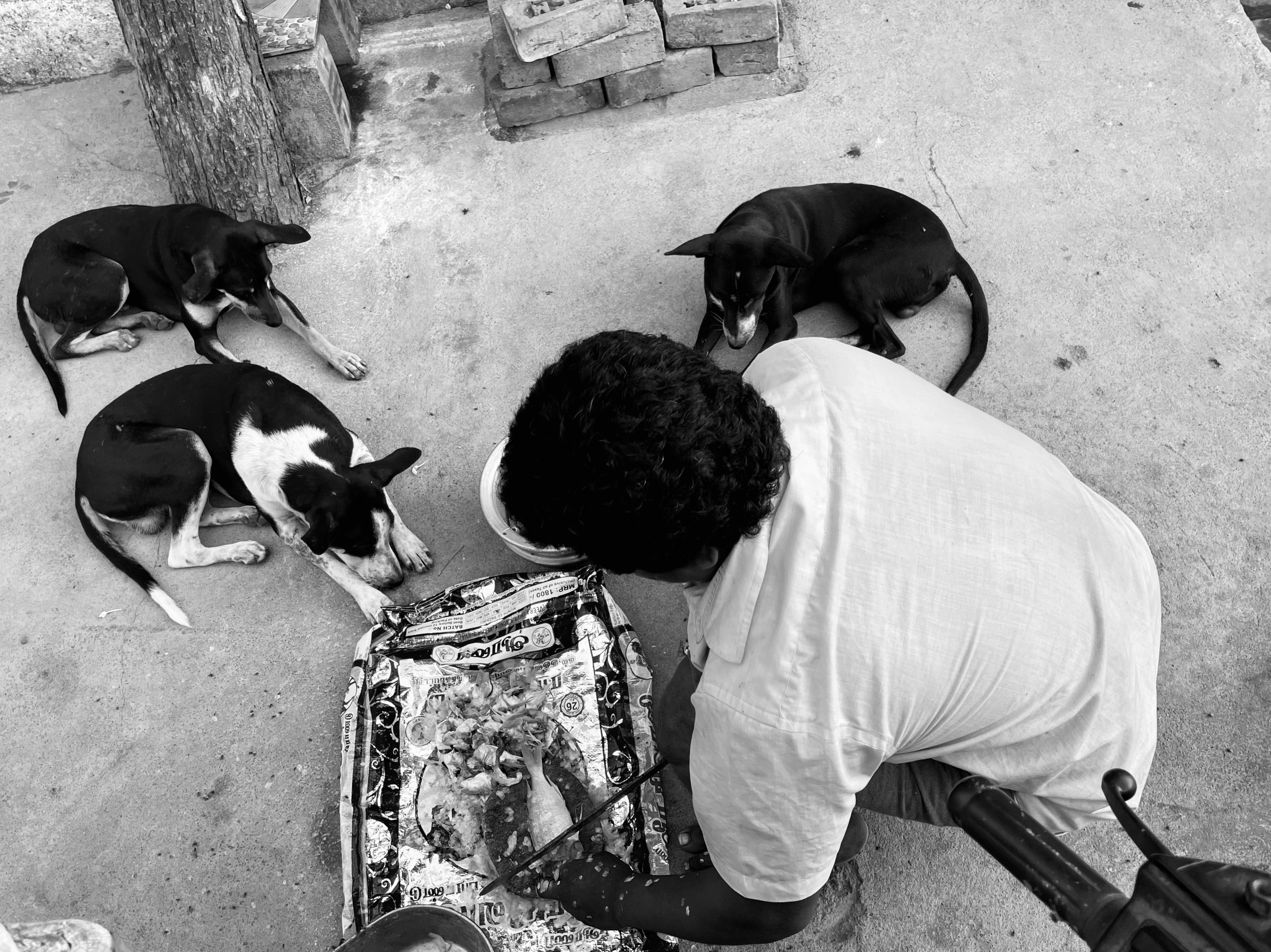
Not here to judge
We're here to help.
No guilt about the missed walk. No shame about the couch. Just one tiny, breed-tuned thing a day — that makes you and your dog feel like a team again.
Build the planCommon questions
Everything you want to know.
How do I calm a high-drive dog?
High-drive dogs — herders, working breeds, terriers, hounds — calm down most reliably through structured mental enrichment that targets their specific genetic drives. More walks don't fix it because walks don't discharge breed-specific wiring. What works is matching the activity to the instinct: scent tracking for hounds, shredding and gripping for terriers, decision-making puzzles for herders, body awareness for anxious dogs. Calmmdog builds a program around exactly those drives — one drill a day, delivered to your inbox every morning at 5am, no planning required.
What is canine enrichment, and does it actually work?
Canine enrichment is the practice of giving dogs mental and physical outlets that match their natural instincts. Unlike obedience training — which asks dogs to suppress behavior — enrichment lets them express it safely through shredding cardboard, sniffing out hidden food, solving simple puzzles, or chewing for long stretches. The behavioral science is consistent: dogs with adequate enrichment show measurably lower cortisol, fewer anxiety behaviors, and better impulse control. It works. The problem is consistency, which is why a daily delivered program outperforms a book or a YouTube search.
How long does it take to see results?
Most owners notice a difference within 2–3 weeks — a dog that settles faster, barks less, and shows less frantic energy by evening. The program compounds: early drills build physical outlet habits, later ones add cognitive challenge and passive self-regulation. Real behavioral change, not temporary distraction.
What breeds does Calmmdog work for?
All AKC breed groups — Herding, Hound, Working, Terrier, Sporting, Toy, Non-Sporting — plus mixes. Each gets a drive profile matched to their genetic history. Border Collies and Australian Shepherds get movement control and decision-making drills. Beagles and Bloodhounds get scent tracking and foraging. Malinois and Dobermans get self-regulation and gripping outlets. Jack Russells and Cairn Terriers get digging and shredding. The plan is never one-size — it's built from your dog's actual breed ancestry.
How is this different from taking my dog for more walks?
Walks exercise the body but rarely discharge the brain. A Border Collie who walks 5 miles still needs to herd something. A Beagle who walks for an hour still needs to follow a scent trail. A terrier still needs to dig and shred. Physical exercise and mental enrichment use different neural systems — enrichment targets the problem-solving and instinct-expression systems that walks leave completely unaddressed. A dog tired from enrichment is genuinely calm. A dog tired from a walk is just... less energetic.
What exactly lands in my inbox every morning?
A single enrichment drill — written specifically for your dog's breed group and behavioral profile. It includes the activity name, what you need (always household items — no purchases required), step-by-step setup, and a plain-English explanation of why it works for your dog specifically. No equipment to buy, no prep the night before. Open your email, read the drill, and you have something genuinely useful to do with your dog that day.
Why does my dog act out when they're "not even that tired"?
Because physical fatigue and mental fulfillment are completely separate systems. A dog can be physically exhausted and still be neurologically under-stimulated — still barking, still pacing, still unable to settle. Breed drives don't care how far you walked. They care whether the instinct was expressed. Scent, shredding, foraging, and problem-solving address those drives directly. That's why 15 minutes of the right enrichment often does more than a 90-minute walk.
Is this suitable for anxious or reactive dogs?
Yes — with a calibrated approach. Anxious and reactive dogs often need lower-arousal enrichment first: long-duration chewing, lick mats, slow sniff work, and co-regulation activities with their owner. The intake form captures anxiety, reactivity, and trigger patterns, and the system weights toward calming sensory and social-emotional drills before adding higher-stimulation activities. We never recommend fetch, dog parks, or group classes for reactive dogs — the 90-day program is private, home-based, and at the dog's own pace.
Bestselling books
The system draws on multiple bestselling canine behavior and enrichment books — synthesized into a daily program you don't have to read.
Peer-reviewed studies
Every drill category is grounded in published behavioral science — brainwave research, decompression studies, drive theory, and stress-response mapping.
Certified enrichment technicians
Activity frameworks were reviewed and refined by certified canine enrichment technicians and applied behavior consultants.
Breed ancestry data
The 2025 AMNH genomic dataset informs how we classify wolf-ancestry proximity and assign drive categories — matched to real genetic history, not pop-science generalizations.
Your dog is ready.
Are you?
They've been waiting patiently. Staring at you. Sighing dramatically. Knocking their bowl around just to hear the sound.
The plan takes three minutes to set up. The first drill lands at 5am.
15min
A day is all it takes
90
Days of breed-matched drills
5am
Arrives before you're awake